Why HR and Talent Should Be Separate But Aligned.

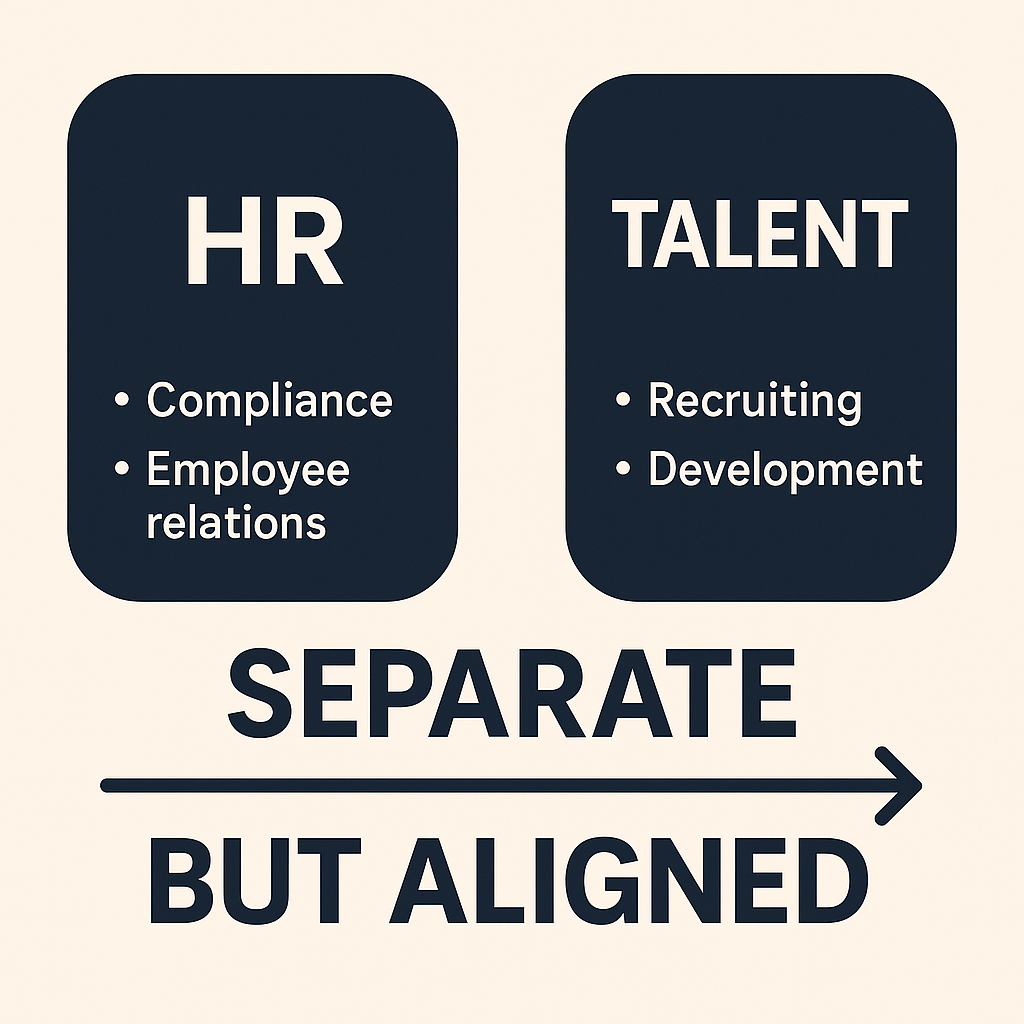
There has long been debate about whether Talent and HR should sit under the same banner. My view? They should be separate departments with distinct mandates, but work in deep alignment.
Different Priorities, Different Mindsets
HR is foundational, ensuring the business runs smoothly through policies, compliance, employee relations, payroll, and risk management. It focuses on stability, governance, and the protection of both people and the organisation.
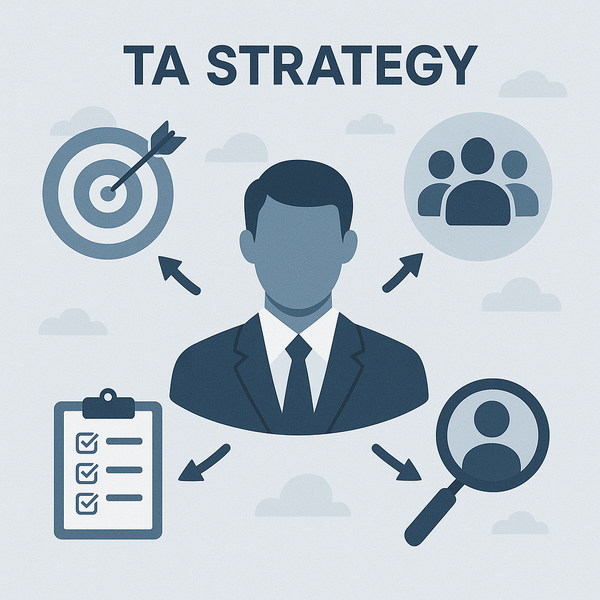
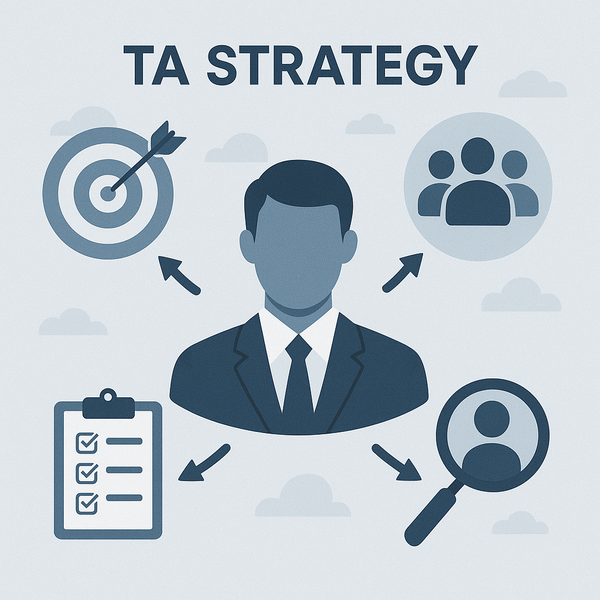
Talent, especially Talent Acquisition, is a growth engine. It’s about understanding the business strategy and proactively building capability to meet future needs. Talent teams look forward, scan the market, manage the brand, and compete for top performers. The priority here is agility, speed, and external influence.
That’s a different muscle. And it requires a different mindset.
Why Should They Be Separate?
Focus and Accountability - When Talent sits inside HR, it often becomes operationally deprioritised. It’s treated as a reactive service, a function that fills jobs when needed, rather than a strategic partner in workforce growth. Separating the two functions enables talent leaders to focus on developing long-term, proactive strategies without being drawn into internal policy cycles or compliance issues.
Pace and Rhythm Are Different - HR often operates on structured, annual rhythms: policy reviews, remuneration cycles, and performance management. Talent, on the other hand, moves at market pace. Talent teams are responding to hiring surges, evolving skills needs, and real-time brand perception in a competitive landscape. Trying to run both at the same cadence limits effectiveness on both sides.
Different Capabilities and Skill Sets - The skills required to lead strong Talent functions, including sourcing, data-driven workforce planning, talent marketing, CRM, and tech stacks, as well as candidate experience, are not the same as those needed for policy development or case management. Separation allows both functions to build the depth of capability they need to lead in their respective domains.
Innovation Needs Space - Talent teams need the freedom to innovate: to pilot new technologies, design agile hiring models, build pipelines, and experiment with employer branding. When Talent is buried within HR, the appetite for innovation is often tempered by the need to maintain compliance and mitigate risk. Separation creates the air cover for experimentation.
Clearer Executive Voice - Talent needs a seat at the strategic table, particularly when businesses are undergoing growth, transformation, or a shift in capabilities. If Talent is buried too deep in HR, the voice advocating for workforce supply, succession risk, or market constraints is diluted. A separate Talent leader can address these challenges directly, in real-time, at the executive level.
Why They Still Must Be Aligned
Separate doesn’t mean siloed. The best outcomes happen when HR and Talent are interdependent partners working together on:
- Workforce planning and forecasting
- Internal mobility and succession
- Retention insights and interventions
- DEI and inclusive hiring
- Employee experience and engagement
Talent informs the external supply and skills landscape. HR shapes the internal environment that attracts and keeps the right people. When both functions work with mutual respect and regular connection, the organisation is stronger for it.
In Summary
There’s always been a natural push and pull between HR and Talent, and that’s okay. It’s not about creating division. It’s about creating focus.
HR and Talent should be strategically distinct, each with their own seat at the table, their own metrics, and their own direction. But operationally aligned, working together to drive shared people outcomes.
The future of work demands more from Talent. Not just headcount fulfilment, but strategic foresight, workforce design, and long-term planning.
That’s a big enough job to deserve its own space.