Stop Reporting Activity. Start Reporting Impact in TA.

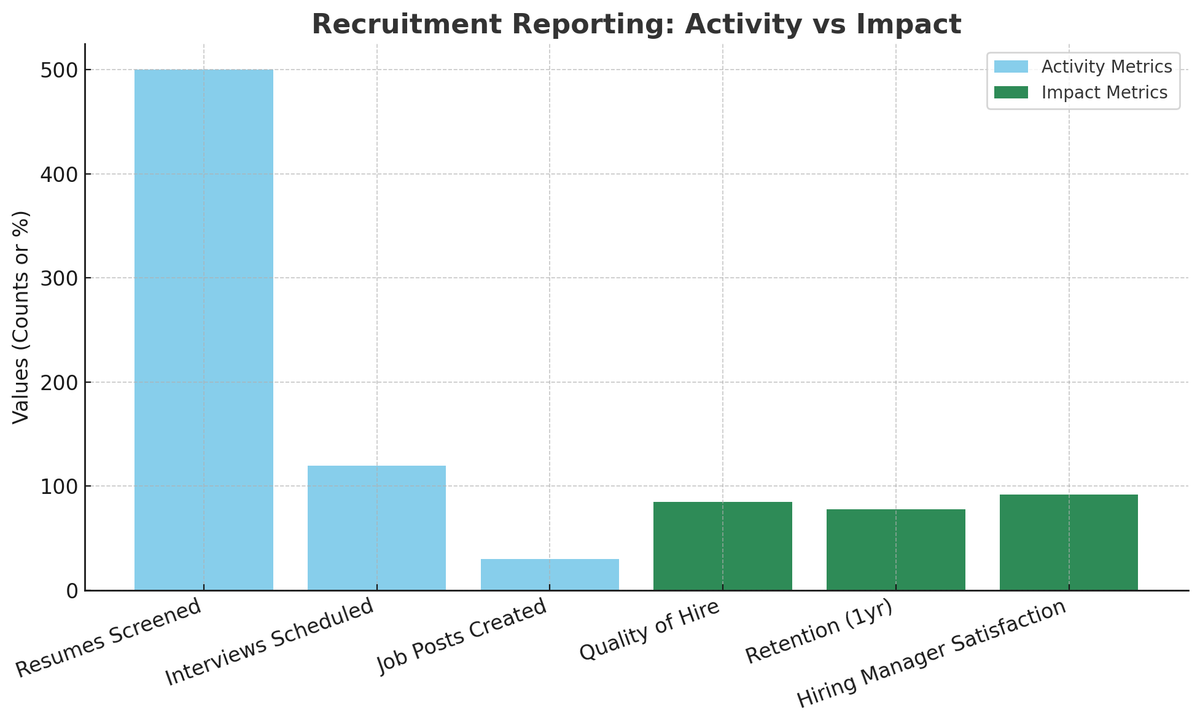
TA has never been busier. Talent Partners are juggling requisitions, sourcing, scheduling, screening, and countless touchpoints with candidates and hiring managers. But here’s the truth: reporting on “how busy” we are doesn’t prove the value of our work. Too often, TA leaders present metrics like:
- Number of resumes reviewed
- Number of interviews scheduled
- Number of job postings created
- Time spent on outreach
These activity-based reports tell us what was done, but they don’t answer the bigger question every executive asks: What difference did it make?
Activity vs. Impact
- Activity Reporting: “We screened 500 candidates this month.”
- Impact Reporting: “Our new sourcing strategy reduced agency spend by 30% while increasing qualified hires in critical roles.”
The first is motion. The second is progress. Executives care about the outcomes that directly connect to business performance, including faster hiring in revenue-driving roles, improved retention, reduced cost per hire, and stronger pipelines for future growth.
Why Impact Reporting Matters
- Builds Business Credibility
When TA demonstrates how hiring outcomes drive revenue growth, productivity, and innovation, it transitions from a “support function” to a strategic partner. - Guides Smarter Decisions
Impact data highlights what’s working and what’s wasting resources. Leaders can double down on high-value efforts and cut noise. - Future-Proof Talent Strategy
Activities change with technology and tools. Impact remains relevant through quality hires, business alignment, retention, and long-term workforce health.
What to Start Measuring
To move from activity to impact, shift reporting to metrics that speak the language of the business:
- Quality of Hire – Are new employees meeting or exceeding performance expectations?
- Hiring Manager Satisfaction – Do business leaders trust the TA function?
- Retention & Mobility – Are Hires Staying and Growing?
- Time to Productivity – How quickly do hires deliver value?
- Business Outcomes – For example: reduced project delays, faster product launches, stronger customer service scores.
How to Get There
- Reframe Metrics in Business Terms
Instead of saying, “We filled 50 roles,” say, “We reduced time-to-fill in customer-facing roles by 20%, preventing an estimated $1.2M in lost sales.” - Tell a Story with the Data
Don’t just share numbers, explain their meaning, connect them to organisational goals, and highlight success stories. - Automate the Noise
Track activities internally for operational improvements, but reserve executive dashboards for impact metrics only.
Activity tells your leadership team that you’re working hard. Impact tells them you’re making a difference.
Talent acquisition has the power to transform businesses, but only if we stop reporting on what we did and start reporting on what we achieved.