Rebuilding TA Infrastructure for Scale and Resilience

Talent Acquisition (TA) is no longer just a recruitment function; it's a strategic enabler of business growth. Yet, many TA teams still rely on fragmented systems and legacy processes that crack under pressure when demand surges or market conditions shift. To meet the growing expectations of agility, efficiency, and quality, it’s time to rethink and rebuild TA infrastructure from the ground up, one designed for scale and resilience.
Why Rebuild?
Over the past few years, we’ve seen dramatic shifts in the hiring ecosystem:
- Volatile hiring cycles driven by market uncertainty
- Global expansion of talent pools, both in geography and diversity
- Increased competition for niche skill sets
- AI and automation are redefining recruiter roles and workflows
Legacy systems weren’t built for this level of complexity. They buckle under volume, don’t integrate well, and are too rigid to adapt. A resilient, scalable TA infrastructure needs to be proactive, data-driven, and intelligently automated.
There is six core principles I think about when looking at developing a Future-Ready TA Infrastructure strategy
- Platform Thinking, Not Point Solutions
Instead of bolting together a mix of disconnected tools, adopt a platform mindset. This means selecting systems that are open, modular, and API-friendly, capable of evolving with your needs without costly overhauls. - Automation for Capacity, Not Just Efficiency
Intelligent automation (like AI-powered sourcing, scheduling bots, and candidate rediscovery) isn't about replacing recruiters; it's about increasing their capacity to focus on strategic tasks. The infrastructure should seamlessly embed these tools to scale recruiter output during hiring spikes. - Resilience Through Agility
Resilience in TA isn’t just about disaster recovery; it’s about flexibility. Can your TA function quickly shift from high-volume hiring to niche executive searches? From in-person assessments to remote hiring? Agility is the new resilience. - Data as a First-Class Citizen
A scalable TA system treats data as a foundational asset, not an afterthought. That means clean, centralised, and actionable data pipelines that fuel real-time dashboards, predictive analytics, and continuous improvement cycles. - Candidate Experience by Design
Infrastructure should empower exceptional candidate experiences from fast, mobile-first applications to transparent, timely communication throughout the process. A bad experience doesn't just cost a hire; it damages your brand. - Scalable Operating Models
Infrastructure isn’t just tech, it’s process and people. Define operating models that can flex with hiring demand, leveraging on-demand recruiting partners, talent communities, and workforce planning integration.
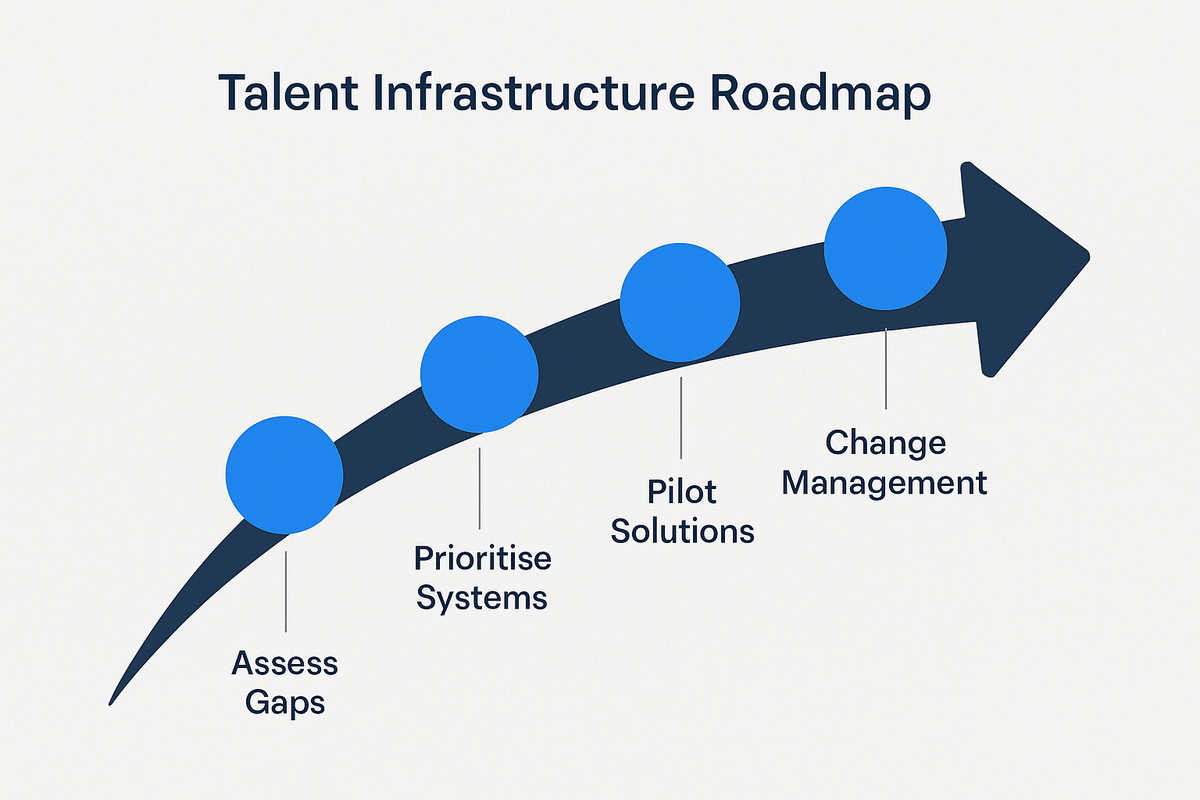
A Realistic Roadmap to Rebuild
Rebuilding doesn’t mean ripping everything out at once. It means:
- Assessing current gaps in scalability, integration, and responsiveness
- Prioritising critical systems for upgrade or replacement (ATS, CRM, analytics platforms)
- Piloting new solutions in high-impact areas like high-volume hiring or campus recruitment
- Creating a change management plan to ensure adoption across TA, HR, and hiring managers
Final Thoughts
A scalable and resilient TA infrastructure isn’t a “nice to have”, it’s a business imperative. Organisations that invest in flexible, tech-forward, and data-powered TA systems will not only weather future disruptions but will also become magnets for top talent in an increasingly competitive market.
Now is the time to future-proof your TA foundation. Because when the next wave of change hits, you will want your infrastructure to be the reason you succeed, not the reason you stall.