How to Structure a High-Impact TA Team

organisation’sBeyond Filling Roles: Building an Engine for Business Growth
For too long, Talent Acquisition has been treated as a reactive, process-driven service function, measured mainly through speed. But high-performing organisations now recognise TA for what it truly is: a strategic growth engine.
The right structure doesn’t just fill roles faster; it enables the business to scale smarter, shape culture intentionally, and stay ahead of workforce trends.
So how do you build a TA team that operates at that level, one that’s not just efficient, but impactful?
Start with Purpose, Not Process
Before you design roles or org charts, define what you want TA to achieve.
Is your priority growth, transformation, diversity, or retention? Your structure should serve that mission.
A high-impact TA team aligns its operating model to business outcomes, not administrative convenience.
Example:
If your organisation is expanding into new markets, you’ll need embedded Talent Partners with deep local intelligence.
If you’re scaling leadership capability, you’ll need an executive search or research function that can proactively map and engage critical talent.
Purpose is the compass; everything else follows.
Build Around Three Core Pillars
A world-class TA function typically balances three interconnected pillars:
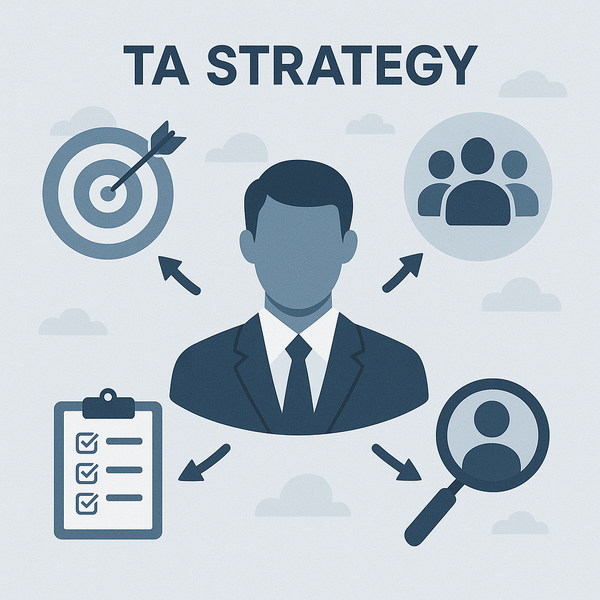
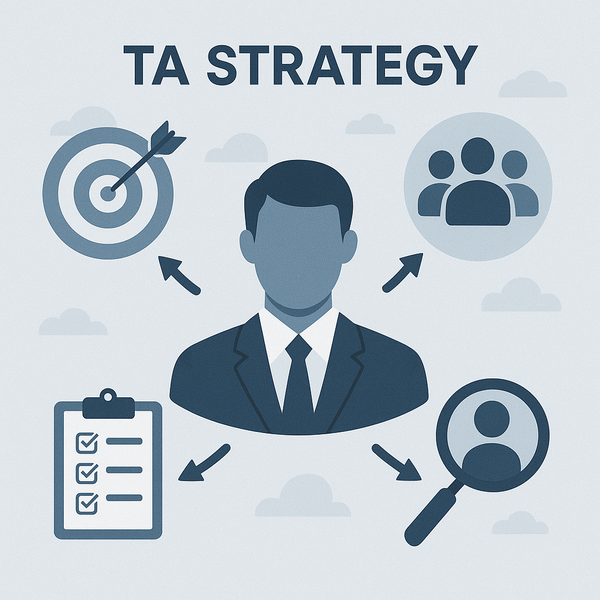
a. Talent Strategy & Intelligence
This team sits closest to the business and shapes hiring strategy based on data and foresight. They analyse workforce trends, competitor movements, and internal talent dynamics to inform where and how to hire. Think of them as the Talent Economists, turning data into direction.
b. Talent Engagement & Delivery
These are your recruiters and sourcing experts, the relationship builders. They’re responsible for market engagement, candidate experience, and end-to-end delivery. But in a modern model, they’re not just “fillers”, they’re Talent Advisors who educate hiring leaders, influence decisions, and drive quality of hire.
c. Employer Brand & Experience
This team owns the story. They bring together recruitment marketing, brand messaging, and candidate experience design. Their work ensures every touchpoint, from outreach to onboarding, reflects the organisation’s purpose and values.
Together, these three pillars create balance: insight + execution + experience.
Embed Flexibility and Specialisation
One of the biggest mistakes in TA structure is rigidity. The best teams operate like adaptive systems, fluid enough to meet changing demand without losing accountability.
Key roles to consider:
- Talent Partners: Embedded with business units, translating workforce needs into talent strategies.
- Research & Intelligence Analysts: Mapping markets, identifying trends, and enabling proactive pipelines.
- Sourcing Specialists: Focused on hard-to-fill or future-critical roles.
- Candidate Experience Leads: Ensuring fairness, consistency, and equity throughout the journey.
- TA Operations: Owning process design, technology, and data integrity.
This structure allows TA to flex between volume hiring, specialist sourcing, and strategic leadership recruitment, without burning out one team.
Invest in Capability, Not Just Capacity
Scaling headcount won’t fix inefficiency. Scaling capability will. A high-impact TA team invests in:
- Commercial acumen: Recruiters who understand business models, not just job descriptions.
- Data literacy: Teams that can interpret metrics and use them to influence decisions.
- Storytelling: The ability to communicate opportunity, not just requirements.
- Equity & inclusion: Every recruiter should understand how bias manifests and how to mitigate it.
Your people are the structure. The org chart matters less than what your recruiters are empowered to know, say, and do.
Measure What Matters
If you measure only speed, you’ll get speed, not quality, impact, or trust. High-impact TA teams track metrics that reflect both business and human value:
- Quality of hire and retention
- Hiring manager enablement
- Candidate experience scores
- Pipeline diversity and readiness
- Forecast accuracy and workforce planning alignment
The best TA leaders use data to tell a story: not just how fast they hire, but how hiring decisions fuel growth, innovation, and culture.
Position TA as a Business Function... Not an HR Subset
Finally, the most impactful shift is organisational. Talent Acquisition should sit alongside the business, not buried beneath layers of HR administration.
TA is the front line of an organisation’s brand, values, and future capability.
It directly influences revenue, customer experience, and innovation.
When TA reports into leadership, collaborates cross-functionally, and operates with data-driven confidence, it earns the right to be seen as what it truly is:
A strategic business function that shapes the company’s future.